 Pin It
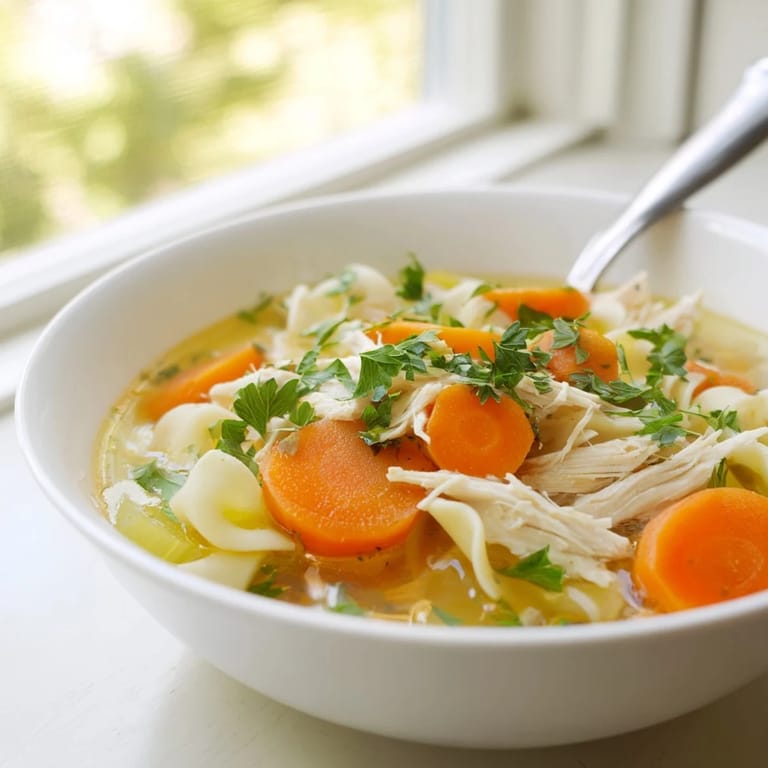
 Last winter my youngest woke up feverish on a Tuesday morning and nothing seemed right until I started chopping onions and carrots. The kitchen filled with that familiar mirepoix scent, and suddenly everything felt manageable again. Somewhere between the garlic hitting the oil and the broth coming to a simmer, I remembered this recipe wasnt really about soup at all.
My grandmother kept a pot going on her back burner whenever anyone in the family was under the weather, but she never wrote anything down. It took me years of overcooked noodles and bland broth to figure out her secret was patience, not complexity. Now this version has become my own go-to for sick days, cold snaps, or just Tuesday nights when nothing else sounds good.
Ingredients
- 2 boneless skinless chicken breasts: Poaching whole keeps them juicy and infuses the broth with rich chicken flavor as they cook
- 2 medium carrots peeled and sliced: Cut them about 1/4 inch thick so they soften but still hold their shape in the soup
- 2 celery stalks sliced: The backbone of any good mirepoix, providing that aromatic foundation
- 1 small yellow onion diced: Sweet onions work beautifully here, becoming melt-in-your-mouth tender
- 2 cloves garlic minced: Add it after the vegetables soften so it doesnt burn and turn bitter
- 6 cups low sodium chicken broth: Starting with low sodium lets you control the seasoning perfectly
- 2 cups wide egg noodles: Wide noodles have more surface area to soak up all that delicious broth
- 1 bay leaf: An essential aromatic that adds subtle depth to the broth
- 1/2 teaspoon dried thyme: Fresh works too if you have it, adding about a tablespoon instead
- 1/4 teaspoon freshly ground black pepper: Freshly cracked makes a noticeable difference in flavor
- 1 teaspoon salt or to taste: Adjust at the end since broth brands vary in sodium content
- 2 tablespoons chopped fresh parsley: Brightens the whole bowl and adds a fresh finish
- 1 tablespoon olive oil: Just enough to sauté the vegetables and build flavor
Tired of Takeout? 🥡
Get 10 meals you can make faster than delivery arrives. Seriously.
One email. No spam. Unsubscribe anytime.
Instructions
- Build your aromatic base:
- Heat olive oil in a large pot over medium heat, then add onions, carrots, and celery. Sauté for 4 to 5 minutes until the vegetables soften and the onions turn translucent. This foundational step creates depth that carries through the entire soup.
- Add the garlic:
- Stir in minced garlic and cook for just 1 minute until fragrant. Watch closely so it doesnt brown or develop any bitter flavors.
- Start the broth:
- Add whole chicken breasts, chicken broth, bay leaf, thyme, salt, and pepper to the pot. Bring to a boil, then reduce heat and simmer uncovered for 15 to 20 minutes until the chicken is cooked through.
- Prep the chicken:
- Remove chicken from the pot and shred it using two forks. The meat will be tender and easy to pull apart into bite sized pieces.
- Cook the noodles:
- Return shredded chicken to the pot and add egg noodles. Simmer for 7 to 8 minutes until noodles are tender. Theyll plump up nicely as they cook directly in the seasoned broth.
- Finish and season:
- Stir in fresh parsley and taste the soup. Adjust salt or pepper as needed. Remove the bay leaf before ladling into bowls.
 Pin It
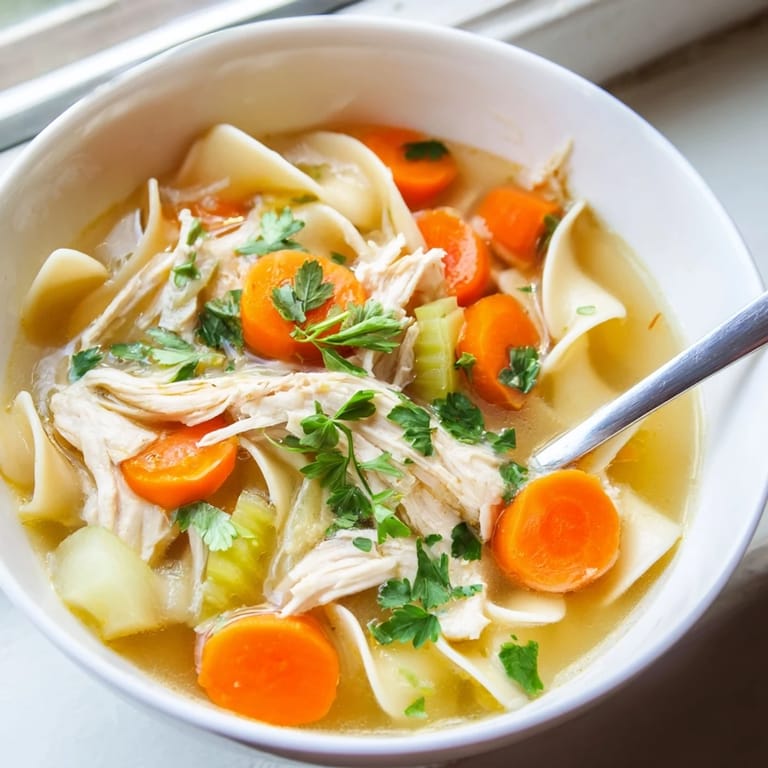
 This soup has a way of showing up exactly when you need it most, whether thats during a February cold snap or after a long day that left you drained. Something about curling around a warm bowl feels like a reset button for the whole week.
Making It Your Own
Chicken thighs work beautifully here and add even more richness to the broth, though they need a few extra minutes of simmering. Sometimes I toss in a handful of spinach or frozen peas during the last two minutes for extra color and nutrition.
The Bread Factor
A crusty baguette or slice of sourdough turns this from light soup to satisfying meal. I like to toast thick slices and rub them with raw garlic while theyre still hot for an extra layer of flavor.
Storage And Reheating
The soup keeps well in the refrigerator for up to four days, though the noodles will continue absorbing broth and may need a splash of water or extra broth when reheating. Freeze without noodles if youre planning ahead, then cook fresh noodles when you reheat.
- Add a squeeze of fresh lemon juice right before serving to brighten all the flavors
- Grate a little parmesan over the top for an umami boost
- Leftovers taste even better the next day as flavors meld
 Pin It
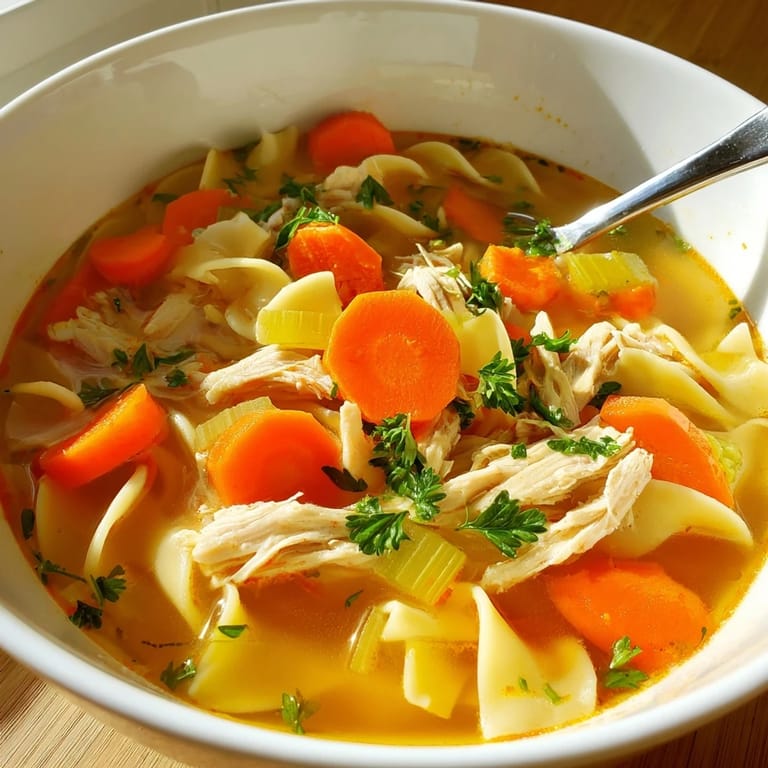
 Theres something profoundly healing about making soup from scratch, especially when the simple act of stirring a pot feels like taking care of yourself too.
Recipe Questions & Answers
- → How long does chicken noodle soup keep in the refrigerator?
Store cooled soup in an airtight container for up to 4 days. The noodles may absorb some broth, so add a splash of water or broth when reheating to restore consistency.
- → Can I freeze this chicken noodle soup?
Freeze without the noodles for best results—noodles become mushy when frozen. Add freshly cooked noodles when reheating. Soup freezes well for up to 3 months.
- → What type of chicken works best?
Boneless, skinless breasts stay tender and shred easily. Chicken thighs offer richer flavor and stay moist during simmering. Both work beautifully in this preparation.
- → How do I prevent the noodles from getting too soft?
Cook noodles separately and add just before serving, or slightly undercook them in the broth since they continue absorbing liquid. This maintains better texture in leftovers.
- → What can I add for extra flavor?
Fresh lemon juice brightens the broth, while a splash of cream adds richness. Fresh herbs like dill or rosemary work well. Some cooks add a Parmesan rind during simmering for depth.
- → Is this suitable for meal prep?
Yes—cook everything except noodles, then add fresh noodles when reheating. Portions store beautifully and the flavors actually develop and improve after a day or two.