 Pin It
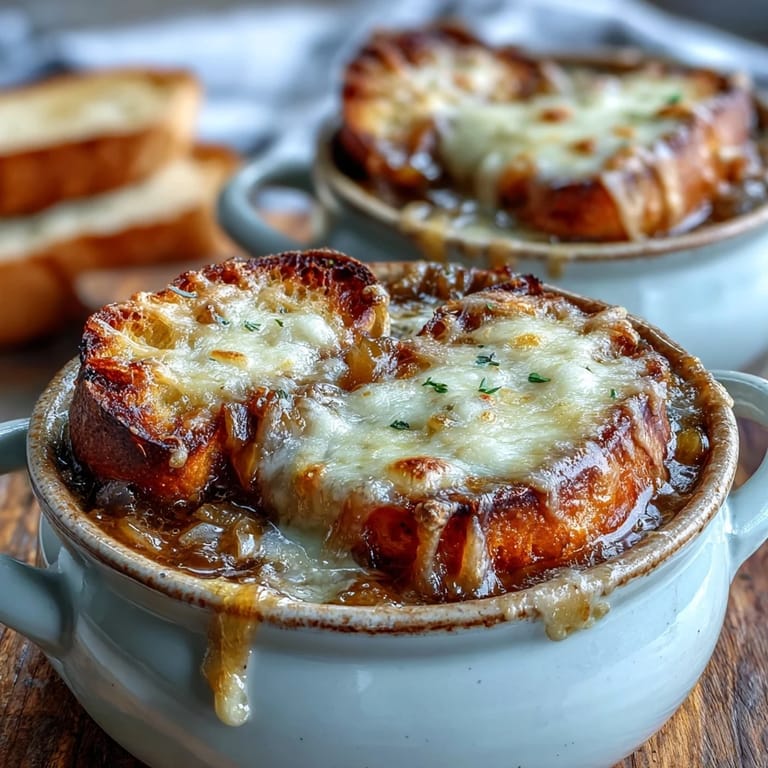
 My neighbor brought over a steaming bowl of French onion soup on the coldest night of the year, and I watched the cheese stretch in golden ribbons as she lifted her spoon. That moment changed how I thought about soup—it wasn't just something to warm you up, it was a reason to sit still and savor. Years later, I discovered that a Dutch oven and patience could recreate that exact magic in my own kitchen, turning humble onions into liquid gold through nothing but time and heat. The first time I made it, my apartment smelled so good that my roommate came home early from work convinced I'd been cooking all day. Now whenever I make this, it feels less like following a recipe and more like unlocking a secret.
I made this for a dinner party where half the guests claimed they didn't really like onions, and by the end of the night, they were scraping the bowls clean and asking for the recipe. Watching skeptics become believers over a single bowl taught me that the right preparation can transform ingredients into something entirely different from what you expect.
Ingredients
- Large yellow onions: Five of them might seem like overkill until you see how they shrink during caramelization—they're the soul of this soup, so don't skimp or substitute with red onions, which won't give you the same sweet depth.
- Unsalted butter and olive oil: The combination is essential; butter alone would burn, but oil alone won't give you that rich flavor, so use both.
- Sugar: Just a teaspoon helps speed up the caramelization without making the soup sweet—it's a small catalyst that makes a big difference.
- Beef broth: This is where quality truly matters; use homemade or a good-quality brand because the broth is doing the heavy lifting in flavor.
- Dry white wine: Deglaze with something you'd actually drink; cheap wine creates an off taste that no amount of cheese can hide.
- Fresh thyme and bay leaves: Dried herbs work, but fresh thyme adds a brightness that feels more alive in the final bowl.
- Worcestershire sauce: The umami anchor that makes people ask what the secret ingredient is, even though it's sitting right there on the ingredient list.
- Gruyère cheese: Worth seeking out because it melts smoothly and adds a subtle nuttiness; other cheeses will work, but this one is worth the trip to a proper cheese counter.
- Baguette: Look for one with a crispy exterior and airy crumb; it should float and soften just enough without disappearing into the soup.
Tired of Takeout? 🥡
Get 10 meals you can make faster than delivery arrives. Seriously.
One email. No spam. Unsubscribe anytime.
Instructions
- Melt your butter and oil foundation:
- Combine the butter and olive oil in your Dutch oven over medium heat and let them get friendly before adding the onions. The mixture should shimmer and smell nutty, not hot or smoking.
- Caramelize the onions with intention:
- Spread those sliced onions into the pot with the sugar and start stirring—this is the part that teaches you patience. After about 20 minutes, they'll soften and start releasing their liquid; don't rush, keep stirring every few minutes, scraping the bottom where the deepest color develops. Around 40 to 45 minutes in, you'll see them turn a deep golden brown, and that's when the magic is happening.
- Wake it up with garlic:
- Once your onions are caramelized, add the minced garlic and cook just until you can smell it—about one minute—then move on so it doesn't catch and turn bitter.
- Deglaze with wine:
- Pour in your white wine and use a wooden spoon to scrape up all those brown bits stuck to the bottom; they're pure flavor. Let it bubble and reduce for a couple of minutes while you inhale the aroma.
- Build your broth foundation:
- Add the beef broth along with the thyme, bay leaves, and Worcestershire sauce, then let everything simmer gently for 20 to 30 minutes so the flavors can get to know each other. Taste and adjust with salt and pepper, keeping in mind that the cheese will add saltiness later.
- Toast your bread while soup simmers:
- Turn your broiler on and arrange baguette slices on a baking sheet, toasting them about a minute per side until they're golden and crispy enough to support the cheese without dissolving.
- Assemble in oven-safe bowls:
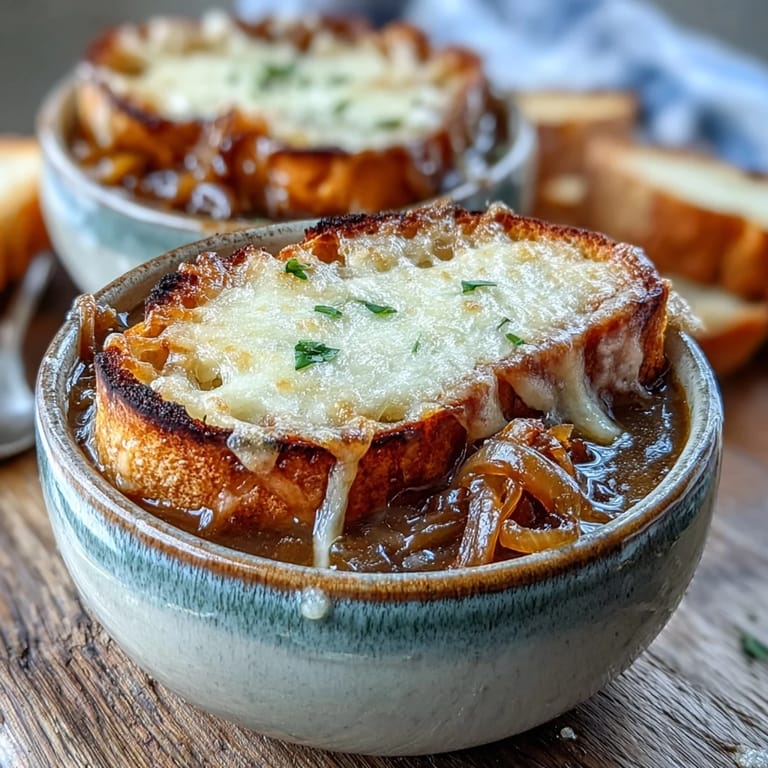
- Ladle the hot soup into bowls, top each with a toasted baguette round, and pile on the Gruyère without shyness. You want enough cheese to create that gorgeous melted layer.
- Finish under the broiler:
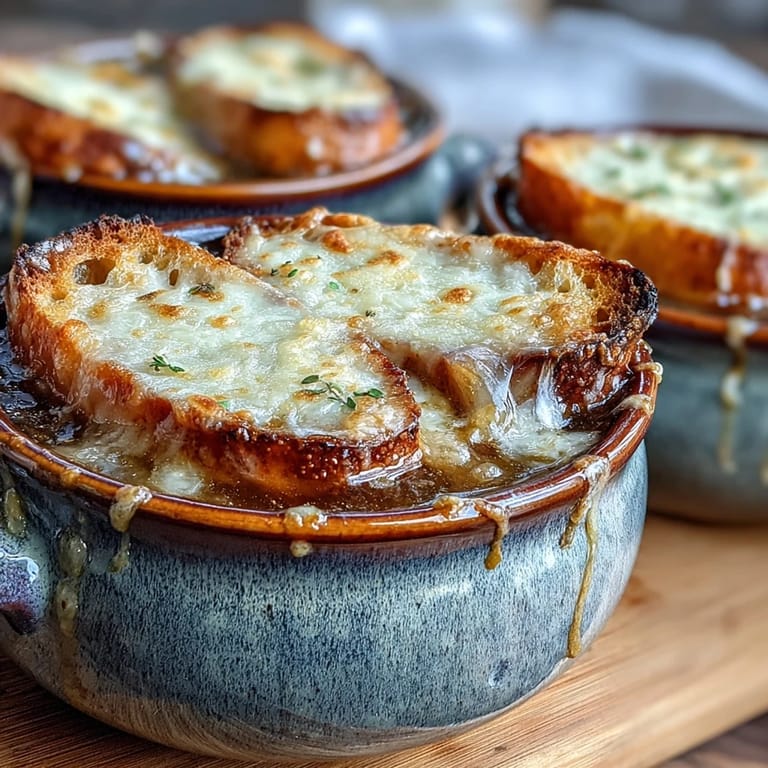
- Set the bowls on a baking sheet and slide them under the broiler for 2 to 4 minutes until the cheese is bubbling and slightly golden around the edges. Watch it carefully because the difference between perfectly melted and burnt is only about 30 seconds.
 Pin It
 A friend once told me that French onion soup is what you make when you want to prove to someone that you love them through food. There's something about the care required—the long caramelization, the careful assembly, the moment you watch cheese melt—that turns it into an act of generosity.
Why Caramelization Changes Everything
When you cook onions slowly, their natural sugars break down and recombine into hundreds of new compounds that create flavors impossible to achieve any other way. It's not just cooking—it's chemistry, and the patience required teaches you something about how time transforms ordinary ingredients. The slower you go, the deeper the flavor becomes, which is why rushing this step is the single biggest mistake home cooks make with this dish.
Cheese Selection and Melting
Gruyère is traditional because it melts smoothly into a creamy layer without becoming stringy or separating, and its subtle, complex flavor complements the onion soup without overpowering it. I've experimented with Emmental, Swiss, and even a blend, and while they all work, something about Gruyère feels like the right choice. The cheese isn't just a topping; it's the final note that makes this soup feel indulgent and complete.
Make It Your Own
This recipe is a foundation, not a law, and some of my best batches happened when I had to improvise. I've added sherry for depth when wine wasn't available, used vegetable broth for vegetarian friends, and even topped bowls with crispy sage leaves instead of just thyme. The core technique stays the same, but you have room to play.
- A splash of sherry or cognac added near the end lifts the entire soup into unexpected territory.
- Fresh cracked black pepper scattered on top just before serving adds a spicy finish that cuts through the richness.
- If you find yourself without oven-safe bowls, broil the cheese on a baking sheet, then carefully float the crispy pieces on top of each bowl—unconventional but equally delicious.
 Pin It
 This soup reminds me why I love cooking—it takes time, it takes care, and when you place it in front of someone, they know you meant it. That's enough.
Recipe Questions & Answers
- → How long does it take to properly caramelize the onions?
Properly caramelizing onions takes 40-45 minutes over medium heat with frequent stirring. This slow process develops the deep, sweet flavor that's essential to authentic French onion soup. Rushing this step will result in less flavorful soup.
- → Can I make this soup vegetarian?
Yes, simply substitute vegetable broth for beef broth and use a vegetarian Worcestershire sauce or omit it entirely. The caramelized onions provide plenty of rich, savory flavor even without meat-based broth.
- → What cheese works best if I can't find Gruyère?
Swiss cheese or Emmental are excellent alternatives to Gruyère. Both melt beautifully and have a similar nutty, slightly sweet flavor profile. You can also use a combination of mozzarella for meltability and Parmesan for flavor.
- → Do I need oven-safe bowls for this dish?
Yes, oven-safe bowls are essential for the final broiling step where the cheese melts and browns on top. Use ceramic, stoneware, or French onion soup crocks that can withstand high broiler heat without cracking.
- → Can I prepare the soup ahead of time?
Absolutely. The soup base can be made 2-3 days ahead and refrigerated. The flavor actually improves as it sits. When ready to serve, reheat the soup, then add the bread and cheese topping and broil as directed.
- → Why add sugar to the onions?
A small amount of sugar helps jumpstart the caramelization process and enhances the natural sweetness of the onions. It doesn't make the soup taste sweet but helps develop that rich, deep golden-brown color and complex flavor.