 Pin It
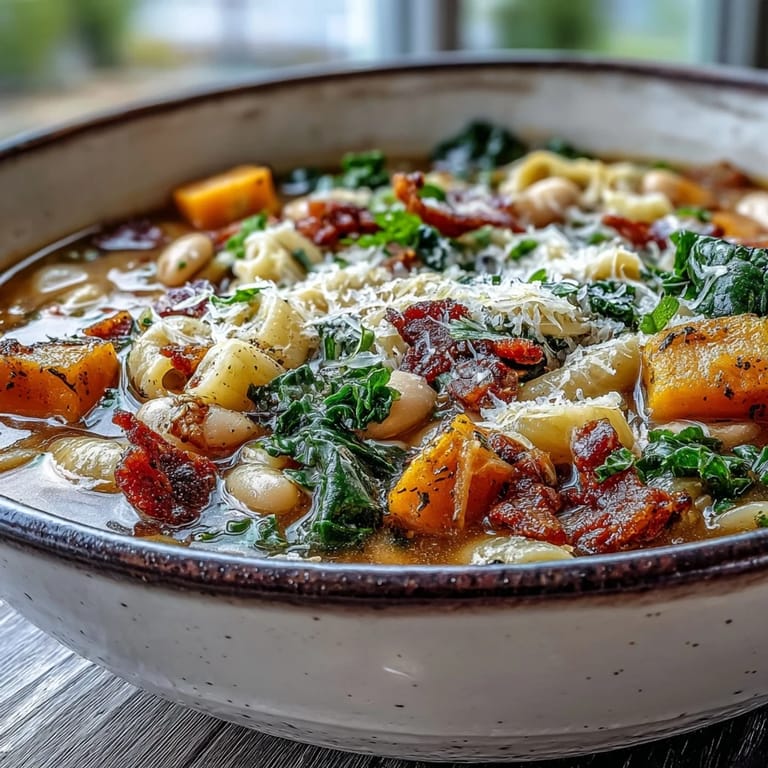
 There's something about October that makes me crave a soup thick enough to stick to your ribs, and this fall minestrone became my go-to when I realized butternut squash and kale could transform a simple pot into something genuinely exciting. My neighbor brought over a basket of mismatched vegetables one afternoon, and instead of letting them wilt in my fridge, I threw them together with some pancetta I had hanging around. The kitchen filled with this warm, savory smell that made everyone who walked past stop and ask what I was making.
I made this for my book club one chilly evening, and instead of the usual salad-and-store-bought-bread routine, I ladled this into bowls while everyone was still in their coats. By the time they settled in, the soup had warmed the whole room, and somehow the conversation shifted from rushed small talk to the kind where people actually linger. My friend Sarah went back for thirds and asked if I could teach her how to make it, which felt like the highest compliment.
Ingredients
- Pancetta, diced: This isn't just a garnish—when you crisp it first, those rendered bits become the flavor foundation that makes everything taste richer and more complex.
- Olive oil: Use something you actually like tasting because it matters here; this isn't the place to reach for the cheapest option.
- Yellow onion, carrots, and celery: This classic trio is your aromatic base, and taking five minutes to chop them properly will give you more even cooking and better flavor distribution.
- Butternut squash: Peel and cube it while it's firm, not soft, or you'll spend twice as long fighting with your knife and end up with uneven pieces.
- Garlic cloves: Fresh is non-negotiable; the minced garlic adds a sharpness that mellows beautifully as it simmers.
- Kale: Remove those woody stems completely or you'll be chewing on something unpleasant; the tender leaves will wilt down to almost nothing.
- Diced tomatoes: The juice in the can is liquid gold—don't drain it away.
- White beans: Canned works perfectly here, just rinse them to remove the excess starch and sodium.
- Ditalini pasta: Small shapes like this cook quickly and feel substantial without drowning; avoid long pasta shapes that make eating soup feel clumsy.
- Chicken or vegetable broth: Quality matters because there's nowhere for mediocre broth to hide in a simple soup like this.
- Thyme, bay leaf, salt, and pepper: Fresh thyme is worth seeking out, though dried works in a pinch—just remember it's more concentrated.
- Parsley and Parmesan: These are your finishing touches that wake up all the flavors right before the bowl reaches someone's hands.
Tired of Takeout? 🥡
Get 10 meals you can make faster than delivery arrives. Seriously.
One email. No spam. Unsubscribe anytime.
Instructions
- Get the pancetta crispy:
- Heat your olive oil in the pot over medium heat and add the diced pancetta, letting it sizzle and give up its fat for about five minutes until the edges are golden and a little crispy. You'll know it's ready when the kitchen smells like you're cooking something important.
- Build your aromatic base:
- Add the onion, carrots, and celery to the pancetta fat and let them soften for about five minutes, stirring occasionally so they color evenly. This is where the slow, savory foundation of your soup gets built.
- Add the squash and garlic:
- Stir in the butternut squash cubes and minced garlic, cooking for just two minutes until the garlic stops smelling sharp and starts smelling sweet. Don't skip this step—it melds the flavors together.
- Add the liquid and seasonings:
- Pour in the diced tomatoes with their juice, the white beans, broth, thyme, bay leaf, salt, and pepper, then bring everything to a simmer. Let it bubble gently, covered, for twenty minutes while the squash becomes tender enough to break with a spoon.
- Finish with kale and pasta:
- Stir in the chopped kale and pasta, and simmer uncovered for eight to ten minutes until the pasta is tender and the kale has wilted into the soup. Taste a piece of pasta to make sure it's actually cooked through.
- Final check and serve:
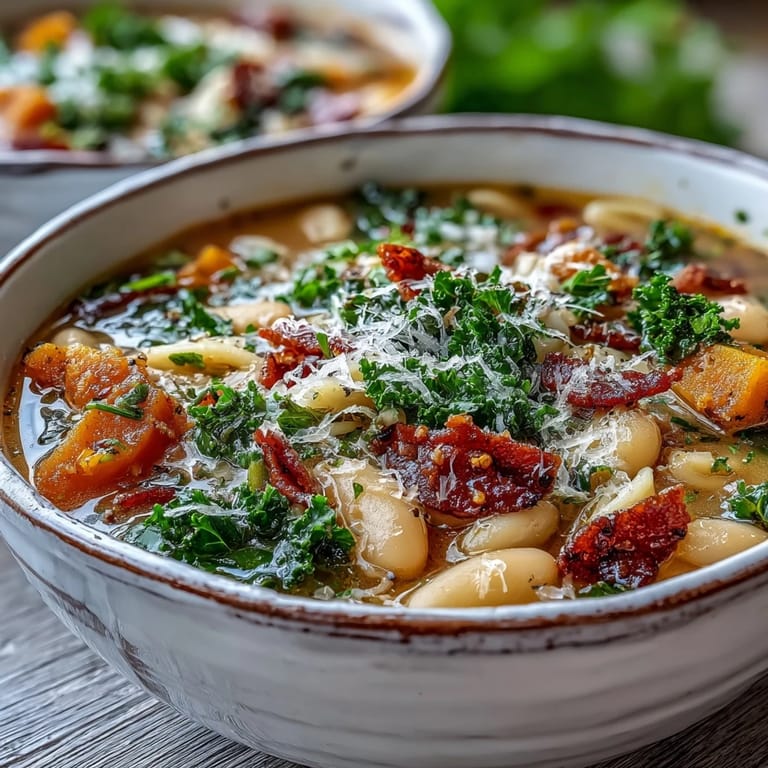
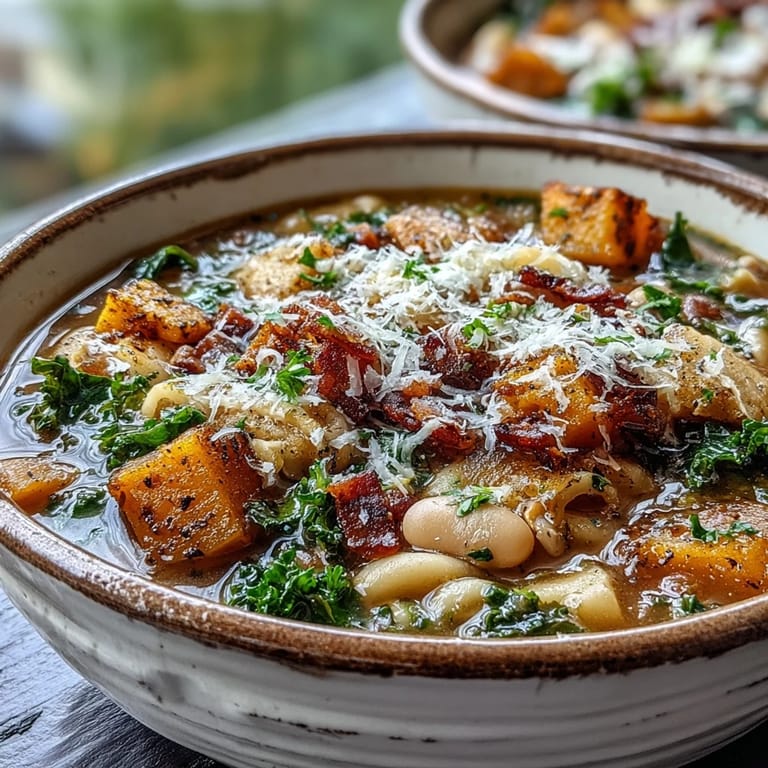
- Fish out the bay leaf, taste the soup, and adjust the salt and pepper until it tastes like something you'd want to eat on a cold day. Ladle it into bowls and top with the reserved pancetta, fresh parsley, and a generous handful of Parmesan.
 Pin It
 My daughter asked why this soup felt different from my usual cooking, and I realized it's because everything in the pot actually stays itself—the butternut squash is still squash, the kale is still recognizable, the beans are whole. It's honest food that happens to be comforting, which is rarer than you'd think.
Making This Vegetarian
Leaving out the pancetta doesn't mean losing flavor; instead, add an extra tablespoon of olive oil and a pinch of smoked paprika to create depth that the pork would have provided. Use vegetable broth instead of chicken, and honestly, the soup becomes lighter without feeling wimpy because the squash, tomatoes, and kale are doing so much work already. I've made it both ways for dinner parties, and vegetarian guests never feel like they got the lesser version.
Storing and Reheating
This soup keeps beautifully in the refrigerator for four days, and the flavors actually deepen overnight as everything gets to know each other better. Freeze it in portions before adding the pasta if you want to extend its life even further, then cook fresh pasta when you're ready to eat. Reheat gently on the stove, not the microwave, so the vegetables don't turn into mush.
Variations and Swaps
Fall vegetables are flexible, and if you don't have butternut squash, try acorn squash, sweet potato, or even zucchini in a pinch. The pasta can be any small shape—orzo, small shells, or even broken spaghetti works if that's what you have. This is the kind of soup where you use what's in your kitchen and it still turns out right.
- Swap kale for spinach or chard if you prefer something more delicate, though kale stands up better to the simmering time.
- Add a parmesan rind to the pot while it simmers for an umami boost that makes everything taste more intentional.
- A splash of red wine vinegar at the end brightens everything up if the soup feels a little flat after tasting.
 Pin It
 This soup has become my answer to the question of what to make when someone needs comfort but healthy, when you're tired but don't want to order takeout, when fall arrives and your kitchen needs to smell like home. Make it once and it'll probably become one of those dishes you find yourself reaching for every October without even thinking.
Recipe Questions & Answers
- → Can I make this minestrone vegetarian?
Yes, simply omit the pancetta and use vegetable broth instead of chicken broth. Add a pinch of smoked paprika to introduce a subtle smoky depth that replaces the savory richness from the pancetta.
- → What pasta shapes work best in minestrone?
Ditalini is traditional, but any small pasta like elbow macaroni, small shells, orzo, or tubettini works beautifully. Just adjust the cooking time according to the package instructions to achieve al dente texture.
- → How do I store leftover minestrone?
Store cooled soup in an airtight container in the refrigerator for up to 4 days. Note that pasta will absorb liquid over time, so you may need to add extra broth when reheating. Freeze for up to 3 months without pasta for best results.
- → Can I prep ingredients ahead of time?
Absolutely. Dice all vegetables, cube the butternut squash, and chop the kale up to 2 days ahead. Store separately in airtight containers in the refrigerator. This makes final assembly quick and convenient for busy weeknights.
- → What can I substitute for butternut squash?
Sweet potato, acorn squash, or even pumpkin work wonderfully as alternatives. Cube them to similar sizes for even cooking. Each brings a slightly different sweetness and texture to the soup.
- → How do I prevent pasta from getting mushy?
Cook pasta directly in the soup only until al dente, typically 8-10 minutes. If making ahead, cook pasta separately and add it to individual bowls when serving to maintain the perfect texture.