 Pin It
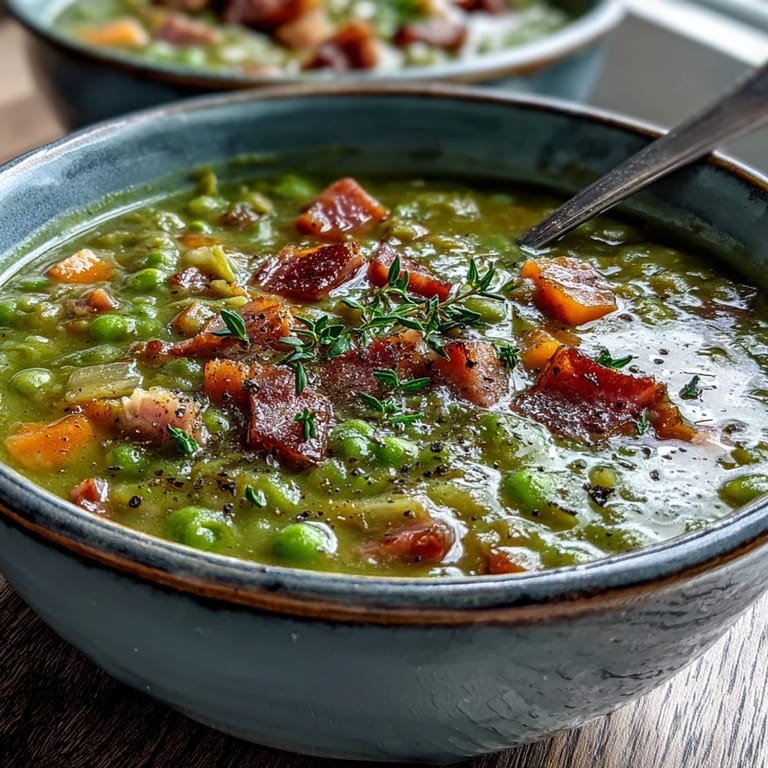
 My mother kept a ham bone wrapped in foil at the back of her freezer like some kind of edible treasure, waiting for the moment when the kitchen felt too quiet and the weather turned gray. One January afternoon, I finally understood why—that bone, simmered with split peas and humble vegetables, transformed into something that tasted like home felt. The soup thickened into this golden, savory embrace, and suddenly the house smelled the way winter was supposed to smell. It became my go-to when friends needed feeding, when my own energy was depleted, or when I simply wanted to prove to myself that the simplest ingredients could become something deeply nourishing.
I made this soup for my neighbor after her surgery, ladling it into mason jars still warm from the pot. She called the next week just to ask if I'd share the recipe, and when I explained it was basically split peas and a ham bone, she laughed—she'd been expecting something complicated. That's the magic of this soup: it looks modest until you taste it, and then people understand why it's been made in kitchens for generations.
Ingredients
- Meaty ham bone or 2 cups diced cooked ham: This is where all the flavor lives—don't skip it or use a skinny bone, because the meat and marrow are what give the broth its deep, savory character that you can't fake with seasoning.
- 1 pound dried split peas, rinsed and sorted: Rinsing matters because it removes the dust, and sorting (picking through with your fingers) prevents biting down on a stray stone that somehow survived milling.
- 1 large onion, diced: The sweetness it releases as it softens is the foundation of everything that follows, so don't rush this step.
- 2 carrots, peeled and diced: They add body and a gentle sweetness that balances the earthiness of the peas.
- 2 celery stalks, diced: This trio of onion, carrot, and celery is called mirepoix for a reason—it's the flavor bed that makes soups taste alive.
- 2 cloves garlic, minced: Add it after the softened vegetables so it perfumes the pot without turning bitter.
- 1 bay leaf: It keeps the soup tasting fresh and prevents the flavor from becoming one-dimensional, though you must remember to fish it out before serving.
- 8 cups low-sodium chicken or vegetable broth and 2 cups water: Low-sodium is key because the ham will add its own salt, and you want control over the final seasoning.
- 1 teaspoon dried thyme and ½ teaspoon black pepper: Thyme feels like it was invented specifically for pea soup, and fresh pepper makes all the difference—pre-ground loses its punch sitting in a jar.
- Salt, to taste: Add it at the end, tasting as you go, because salt is the only seasoning you can actually adjust once you've gone too far.
Tired of Takeout? 🥡
Get 10 meals you can make faster than delivery arrives. Seriously.
One email. No spam. Unsubscribe anytime.
Instructions
- Start with the aromatics:
- Heat oil in your stockpot over medium heat, then add the diced onion, carrots, and celery. Stir them for five to six minutes until they soften and turn translucent at the edges—you'll hear the gentle sizzle quiet down once they're done sweating out their moisture. This is the moment the kitchen starts to smell intentional.
- Bloom the garlic:
- Add the minced garlic and cook for about a minute until it becomes fragrant and loses its sharp rawness. You'll know it's ready when the kitchen fills with that unmistakable garlic perfume.
- Build the soup:
- Stir in the rinsed split peas, ham bone or diced ham, bay leaf, thyme, broth, and water all at once. The mixture will look loose and watery, but trust that the peas are about to work their magic as they slowly break down and thicken everything.
- Simmer covered:
- Bring the pot to a boil, then lower the heat to the gentlest simmer possible and cover it. Let it bubble quietly for an hour, stirring every fifteen minutes or so—this prevents sticking and ensures the peas cook evenly. The steam trapped under the lid does most of the work here.
- Thicken and finish cooking:
- Remove the lid and simmer for another twenty to thirty minutes, stirring occasionally, until the peas have completely collapsed and lost their shape. The soup will go from looking like pea soup to looking like pea soup, if that makes sense—it transforms from brothy to creamy and thick.
- Rescue the ham:
- Remove the bay leaf and lift out the ham bone if you used one. Once it's cool enough to handle, pick the meat from the bone, chop it into small pieces, and return it to the pot. Any scraps clinging to the bone are liquid gold—don't waste them.
- Season and adjust texture:
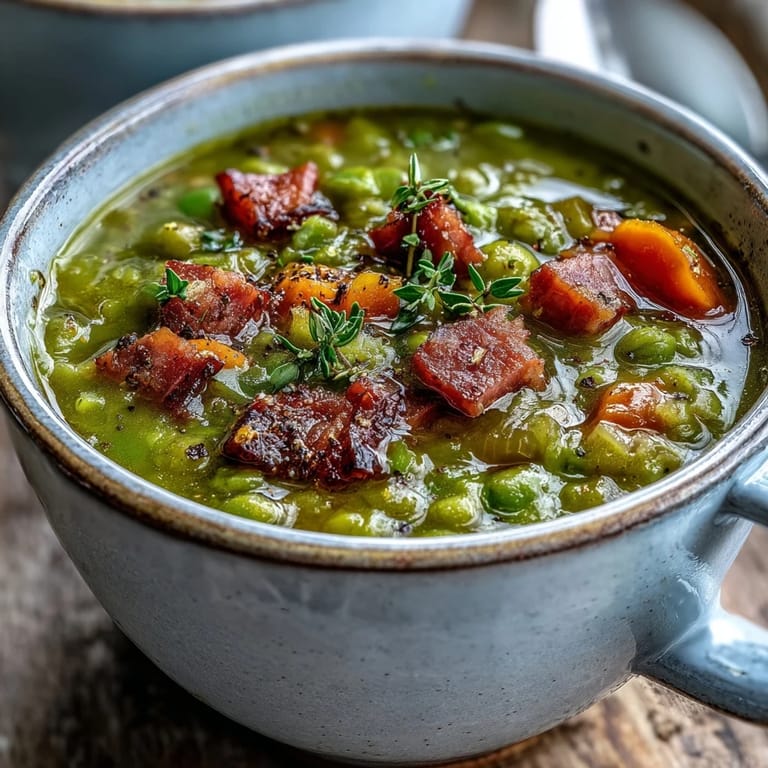
- Taste the soup and add pepper and salt until it tastes right to you. If you prefer it thicker, partially mash the peas with the back of a spoon or use an immersion blender to make it smoother—I usually do a half-measure, leaving some peas whole for texture.
 Pin It
 My sister brought her new partner to dinner one winter evening, and I served this soup with thick slices of toasted bread and butter. Halfway through, he asked if this was a restaurant recipe, and when my sister told him I'd learned it from our mother, something shifted in the room—suddenly we weren't just eating soup, we were sharing something that connected us backward and forward through time. That's when I realized this wasn't just food; it was a conversation between generations.
The Gift of Leftovers
This soup actually improves after sitting overnight, as the flavors have time to deepen and become more cohesive. I've learned to make it in larger batches specifically so I have portions waiting in the refrigerator for mornings when I need something warm and ready. It stores beautifully for up to four days in the fridge and freezes for three months—though in my house, it rarely lasts that long.
Playing with the Recipe
Once you understand the bones of this recipe, it becomes a canvas for whatever you have on hand. I've added diced potatoes for extra substance, thrown in parsnips for a slightly sweeter note, and even experimented with smoked paprika when ham wasn't available. The soup welcomes these additions as long as you remember that the split peas and broth are the foundation everything else builds from.
Serving and Storing
Serve this soup hot in deep bowls with crusty bread on the side—the bread is essential because there will be moments when you want something to soak up every last drop. The soup is equally welcome at a weeknight dinner table or as a starter before something more formal, and it travels beautifully in thermoses if you're bringing it somewhere. Consider these final touches:
- A drizzle of good olive oil and a scatter of fresh herbs like parsley or chives adds brightness right before serving.
- Keep the seasoning slightly under-salted because salt intensifies as leftovers sit, and you can always add more at the table.
- If the soup thickens too much after a day or two, thin it with a splash of broth or water and heat it gently until it reaches the consistency you want.
 Pin It
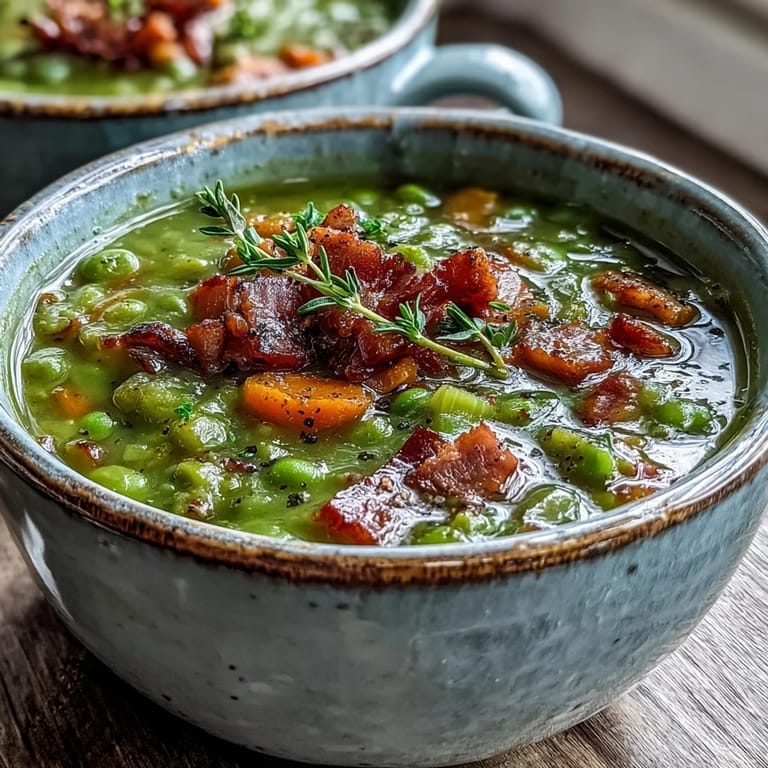
 This soup has fed more people than I can count, and it never asks for anything more than what you're willing to give it. Make it, taste it, adjust it until it tastes like home to you—then make it again.
Recipe Questions & Answers
- → Can I make this soup without a ham bone?
Yes, you can use 2 cups of diced cooked ham instead of a ham bone. For added depth without meat, try smoked paprika or liquid smoke to replicate that smoky flavor.
- → Do I need to soak split peas before cooking?
No, split peas do not require soaking. Simply rinse and sort them before adding to the pot. They will cook thoroughly in about 90 minutes of simmering.
- → How can I make the soup thicker or thinner?
For thicker soup, simmer uncovered longer to reduce liquid, or use an immersion blender to puree some of the peas. For thinner consistency, add more broth or water during cooking.
- → Can this soup be frozen?
Yes, this soup freezes beautifully for up to 3 months. Store in airtight containers, leaving some space for expansion. Thaw overnight in the refrigerator and reheat gently on the stovetop.
- → What can I serve with split pea and ham soup?
This soup pairs wonderfully with crusty bread, cornbread, or dinner rolls. A simple green salad or coleslaw makes a nice fresh contrast to the hearty, warming soup.
- → Why is my soup too salty?
Ham bones and broth can be quite salty. Use low-sodium broth and taste before adding salt at the end. If too salty, add diced potatoes to absorb excess salt or dilute with water.