 Pin It
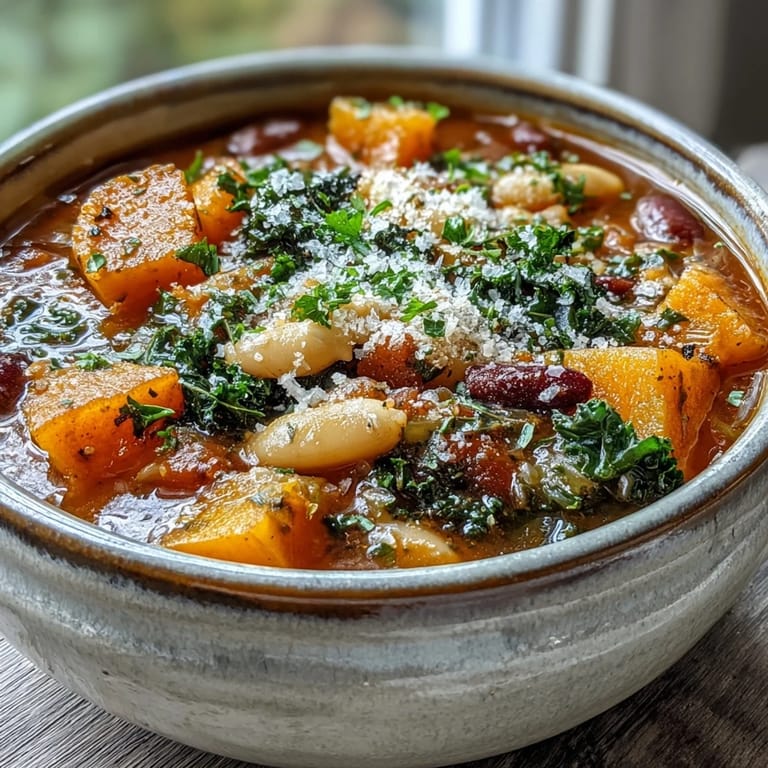
 There's something about the smell of butternut squash caramelizing in olive oil that makes November feel less grey. I stumbled onto this soup during a farmer's market visit when I couldn't resist buying an enormous squash I had no immediate plans for—but standing in my kitchen that afternoon with the first real cold snap outside, it felt obvious. This minestrone came together almost by accident, borrowing from memories of my neighbor's kitchen and a half-remembered Italian cookbook, turning what could have been a sad vegetable situation into something my whole family asked for again the next week.
I made this for my sister's first week in her new apartment, showing up with a huge pot and the kind of quiet understanding that only soup can offer. She was exhausted from moving, the boxes everywhere, no real furniture yet, and we sat on the floor eating straight from mismatched bowls while she talked about how overwhelmed everything felt. By the third spoonful, I watched her shoulders drop just slightly—something about the warmth and the vegetables and the pasta doing their job.
Ingredients
- Olive oil: Use good quality here—it's one of the few fats carrying the whole flavor, and you'll taste the difference between something golden and something that tastes like nothing.
- Yellow onion, carrots, and celery: This holy trinity is your flavor foundation, so don't rush the sauté—those 5 minutes of softening are when the magic starts.
- Garlic cloves: Minced fine and stirred in right after the soffritto, so the heat doesn't burn it into bitterness.
- Butternut squash: The star that brings sweetness and body—peel it while it's still raw if you can manage it (it's easier), and cut the pieces roughly the same size so everything finishes together.
- Zucchini: Adds a lighter, fresher note that keeps the soup from feeling too heavy, even though it's absolutely substantial.
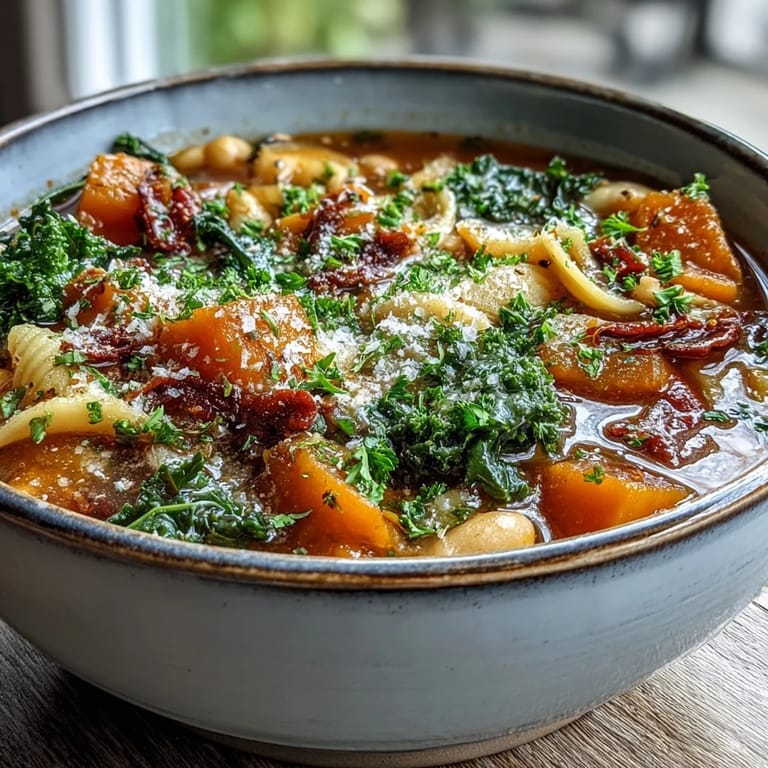
- Fresh kale: Remove those tough stems and chop the leaves roughly—they'll wilt down to almost nothing in the last couple minutes, but they bring iron and a slight peppery edge.
- Diced tomatoes: Canned tomatoes work beautifully here because they're picked at peak ripeness and the acidity balances all that sweetness from the squash.
- Cannellini beans: Creamy and mild, they thicken the broth without overpowering anything else—rinse them well to reduce the starches.
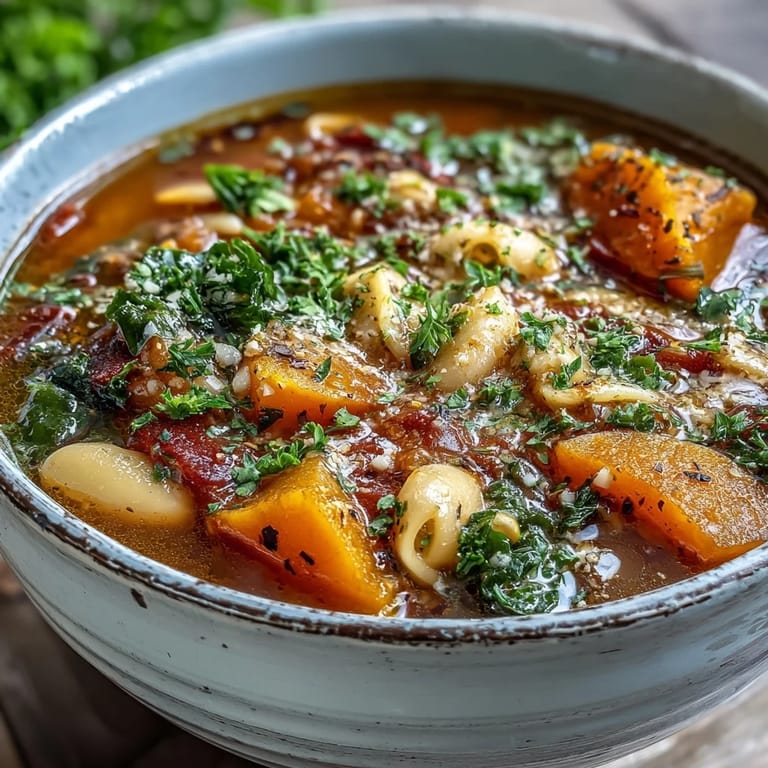
- Small pasta: Ditalini or elbow macaroni works best because larger pasta pieces get lost in a big spoon of soup; they finish cooking in the broth so they stay tender.
- Vegetable broth and water: The water lightens things up so it's not too salty or one-note—taste as you go and adjust the ratio if you like it brothier.
- Dried oregano, thyme, and rosemary: This Italian trio is dried rather than fresh because the long simmer actually pulls them out and intensifies them, and fresh herbs would turn to dust.
- Red pepper flakes: Optional but worth it—just a whisper adds complexity that makes people wonder what your secret is.
- Fresh parsley: Stirred in at the very end so it stays bright and sharp, almost like a final wake-up call for your taste buds.
- Parmesan cheese: A savory finish that catches on the surface of each spoonful—use the good stuff if you can, because it matters.
Tired of Takeout? 🥡
Get 10 meals you can make faster than delivery arrives. Seriously.
One email. No spam. Unsubscribe anytime.
Instructions
- Build your base:
- Heat olive oil in a large pot over medium heat and add the diced onion, carrots, and celery—this is called a soffritto, and you're looking for them to turn soft and smell almost sweet, about 5 to 6 minutes. Let them get a little color at the edges because that's where the flavor deepens.
- Wake up the garlic:
- Stir in your minced garlic and cook for just one minute—this is one of those moments where timing matters because you want fragrant, not burnt. The kitchen will smell incredible and that's your signal to move to the next step.
- Add the squash and zucchini:
- Toss in your diced butternut squash and zucchini, stirring occasionally for about 4 to 5 minutes so they get kissed by the oil. The squash will start to soften around the edges and the zucchini will smell grassy and fresh.
- Pour in the tomatoes and liquid:
- Add your diced tomatoes with all their juices, along with the vegetable broth and water, and let it come to a full boil. You'll see steam rising and the whole pot will look alive and ready to do the work.
- Season and simmer:
- Stir in the oregano, thyme, rosemary, and red pepper flakes if using, then reduce your heat and let it simmer uncovered for 15 minutes. The flavors will mellow into each other and the soup will smell like an Italian kitchen in November.
- Add beans and pasta:
- Stir in the drained cannellini beans and your small pasta, then simmer for another 8 to 10 minutes until the pasta is tender and the squash breaks apart if you press it with a spoon. Stir occasionally so the pasta doesn't stick to the bottom.
- Finish with kale:
- Add your chopped kale and cook for 2 to 3 minutes more—watch as it transforms from leafy and substantial to delicate and almost translucent. Taste and adjust the salt and pepper because this is your last chance to get it right.
- Stir in parsley and serve:
- Remove from heat and stir in your fresh parsley, then ladle into bowls and top with grated Parmesan if you like. Serve it hot, the way soup deserves to be served.
 Pin It
 I realized this soup had become part of our seasonal rhythm when my partner started asking for it unprompted sometime after the first frost—not because he was hungry, but because it meant something about the turn of the year, about slowing down and sitting together. That's when I knew it wasn't just a recipe anymore.
The Butternut Squash Secret
The butternut squash is doing more work than you might think—it's not just adding sweetness and nutrition, it's actually thickening the broth naturally as it breaks down, so the soup becomes silkier the longer it sits. I learned this by accident when I let a batch simmer too long while I was distracted, and instead of being ruined, it had transformed into something richer and more luxurious. Now I sometimes let it go a few extra minutes on purpose, mashing a few squash pieces against the side of the pot with my spoon to release that natural starch into the liquid.
Bread Pairing and Beyond
This soup deserves bread, real bread—the kind with a crust that cracks when you bite into it and a warm crumb inside. I've found that crusty bread becomes almost part of the experience, something to tear into pieces and let soak up the broth, or to use as a vehicle for scraping that last bit of squash and bean from the bottom of the bowl. A simple rubbing of raw garlic on warm bread before dunking it into the soup transforms both into something better than the sum of their parts.
Variations and Flexibility
This recipe is flexible in the way that actually matters—if you can't find butternut squash one week, acorn squash works almost as well, or even sweet potato if you're feeling adventurous. I've made it vegan for friends by skipping the cheese finish, and the soup stands on its own strength without it. The pasta and bean options are truly open to interpretation, and the herbs can shift slightly depending on what's been sitting in your spice cabinet.
- Swap the kale for spinach or Swiss chard if that's what you have, stirring it in the same way at the end.
- A Parmesan rind simmered in the broth for the full 15 minutes adds a savory depth that's almost impossible to replicate—just remember to fish it out before serving.
- Leftovers thicken as they sit in the refrigerator, so add a splash of broth or water when reheating to return them to their original silky texture.
 Pin It
 This minestrone is the kind of soup that wraps around you on a cold day and reminds you why we gather in kitchens in the first place. Make it for yourself first, and then make it for someone who needs it.
Recipe Questions & Answers
- → Can I make this minestrone ahead of time?
Yes, this soup stores beautifully for up to 4 days in the refrigerator. Note that the pasta will absorb liquid over time, so you may need to add extra broth when reheating. For best results, consider cooking the pasta separately and adding it to individual portions.
- → What can I substitute for butternut squash?
Sweet potato, acorn squash, or sugar pumpkin work wonderfully as alternatives. Dice them to similar sizes for even cooking. Each brings a slightly different sweetness and texture while maintaining the hearty winter character of the soup.
- → How do I make this soup more filling?
Increase the pasta to 1 cup, add an extra can of beans, or stir in diced cooked chicken or Italian sausage. You can also serve it over toasted bread rubbed with garlic for a traditional ribollita-style presentation that's incredibly satisfying.
- → Can I freeze leftover minestrone?
Absolutely. Freeze in portions for up to 3 months. For best texture, undercook the pasta slightly before freezing. Thaw overnight in the refrigerator and reheat gently on the stovetop, adding a splash of broth to restore consistency.
- → What other greens work besides kale?
Spinach, Swiss chard, escarole, or mustard greens all make excellent substitutions. Spinach wilts quickly, so add it in the last minute of cooking. Heartier greens like chard can be added with the kale for similar results.
- → How can I add more depth to the broth?
Simmer a Parmesan rind in the soup and remove before serving. A splash of balsamic vinegar or red wine during cooking adds complexity. You can also brown the tomato paste separately before adding liquids for a richer, more caramelized flavor base.