 Pin It
 A few winters ago, I found myself chopping vegetables in near-silence while snow fell outside my kitchen window, and something about the rhythm of the knife on the cutting board felt meditative. My neighbor had mentioned she was fighting off a cold, so I decided to make her something warm and honest—no fuss, just good ingredients simmered together. That pot of minestrone became a sort of ritual for me, something I return to whenever the season turns gray and I need both comfort and purpose.
I remember ladling this soup into mismatched bowls for my sister's family on a Saturday in January, watching my three-year-old nephew actually ask for seconds of something green, and feeling like maybe I'd accidentally discovered a small kitchen miracle. The house smelled like rosemary and caramelized onions, and everyone slowed down to eat together—no one rushed through it.
Ingredients
- Olive oil: Start with good oil because it anchors the whole flavor base; I learned this after using whatever was on sale.
- Yellow onion, carrots, and celery: This holy trinity is your flavor foundation, so don't skip the 5-minute sauté—it matters more than you think.
- Garlic cloves: Mince them finely and watch the moment the smell hits the pan; that's when you know you're on the right track.
- Butternut squash: Peel and cube it ahead of time if you want, or buy it pre-cut if life is busy—there's no shame in that choice.
- Zucchini: Dice it roughly; it'll soften into the broth and contribute moisture and subtle flavor.
- Diced tomatoes: Canned works beautifully here and actually provides better consistency than fresh.
- Kale: Remove the tough stems, tear the leaves, and add them toward the end so they stay slightly textured instead of turning to mush.
- Cannellini beans: Rinse them well to reduce sodium and prevent cloudiness in your broth.
- Small pasta: Ditalini is traditional, but honestly any tiny shape works; add it near the end so it doesn't absorb all the liquid.
- Vegetable broth: Use good broth—it's the backbone of everything, so this is worth choosing carefully.
- Dried herbs: Bay leaf, oregano, thyme, and rosemary work in concert to create that warm, herbaceous depth that makes people ask for the recipe.
Tired of Takeout? 🥡
Get 10 meals you can make faster than delivery arrives. Seriously.
One email. No spam. Unsubscribe anytime.
Instructions
- Build your flavor base:
- Heat olive oil over medium heat, then add onion, carrots, and celery, stirring occasionally for about 5 minutes until the edges soften and the kitchen fills with that warm, vegetal smell. You'll know you're ready to move forward when the onion turns translucent and starts to smell almost sweet.
- Wake up the garlic:
- Stir in minced garlic and let it cook for just one minute, long enough to become fragrant but not so long that it burns and turns bitter. This is a quick step but an essential one.
- Add the squash and zucchini:
- Toss in the butternut squash and zucchini, stirring gently for another 5 minutes until the squash begins to soften slightly at the edges. The vegetables should start releasing their moisture into the oil, creating a light sauce.
- Build the broth:
- Pour in diced tomatoes, vegetable broth, bay leaf, oregano, thyme, and rosemary, then bring everything to a boil, which usually takes about 5 minutes. You'll see the surface start to move and bubble up—that's your cue to lower the heat.
- Let it simmer gently:
- Reduce heat to a simmer, cover the pot, and let it cook for 15 minutes until the butternut squash is tender enough to break apart with a wooden spoon. The kitchen will smell incredible at this point.
- Finish with beans, pasta, and greens:
- Remove the lid, add cannellini beans, small pasta, and chopped kale, then simmer uncovered for 10 to 12 minutes, stirring occasionally, until the pasta is cooked through and the kale has wilted into dark ribbons. Taste as you go—the pasta will absorb some broth, which is exactly what you want.
- Season to perfection:
- Remove the bay leaf, then taste and season generously with salt and pepper, adjusting to your preference. Remember that flavors always feel more muted when food is hot, so be a little bolder than you think you need to be.
- Serve with intention:
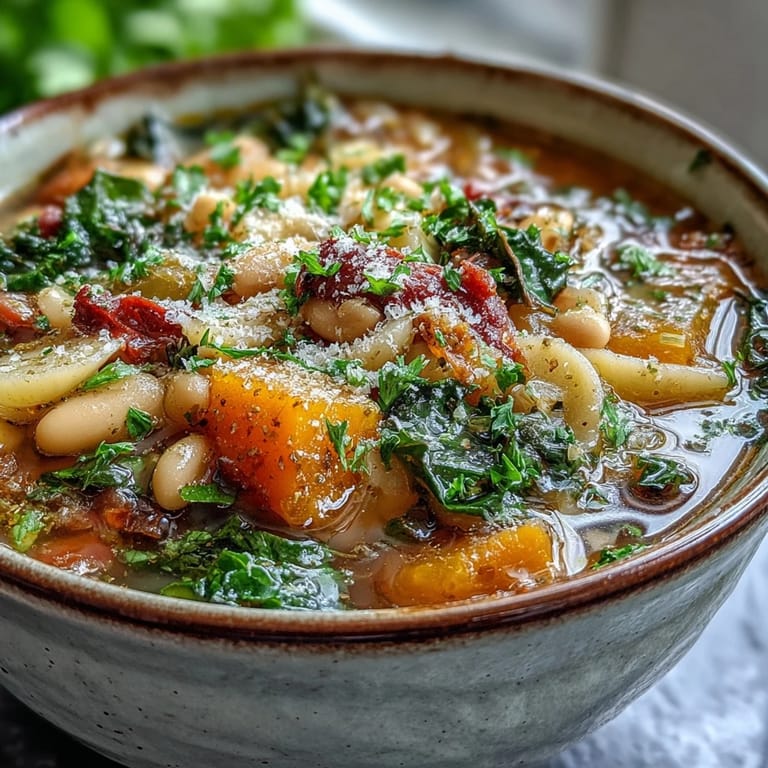
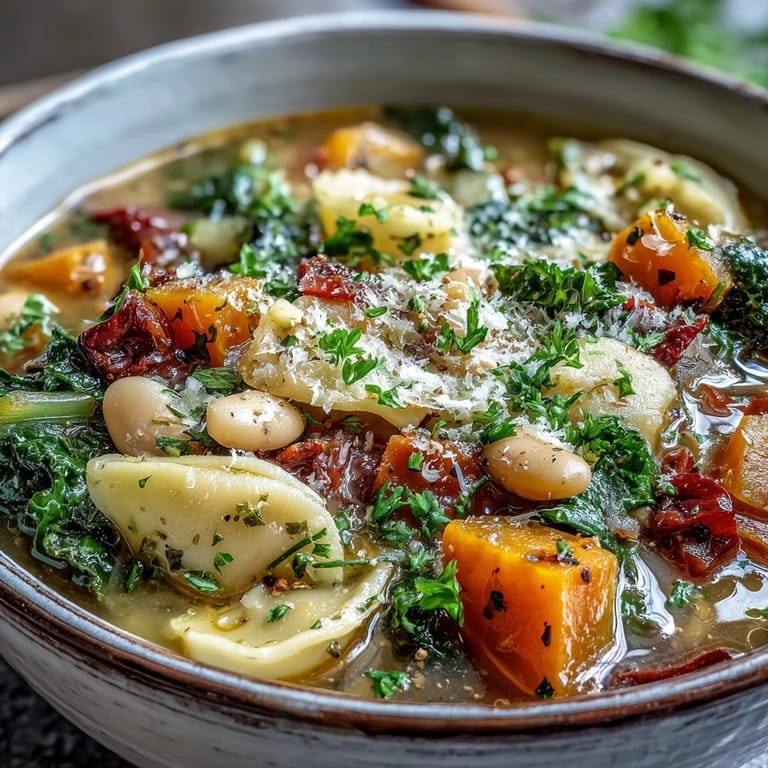
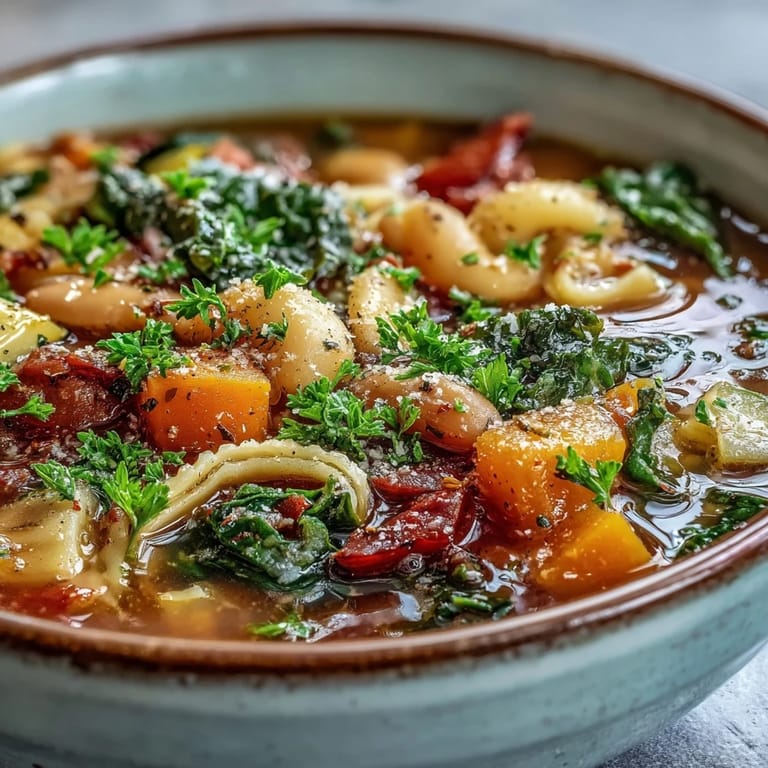
- Ladle the soup into bowls, drizzle with good olive oil if you have it, and top with a handful of fresh parsley and grated Parmesan if using. Serve alongside crusty bread for dipping or tearing into the bowl.
 Pin It
 I've learned that soup has a way of becoming more than dinner when you serve it to someone who needs warmth, whether that's physical warmth or the emotional kind. This particular minestrone has been my answer more than once when a friend mentioned feeling under the weather or when I simply wanted to show up for someone without making a big production out of it.
The Magic of Seasonal Cooking
Winter vegetables have a different energy than summer ones; they're dense and grounding, built to sustain you through the colder months. Butternut squash and kale come alive in cold weather, developing sweetness and depth that you won't find in early summer versions. When I make this soup in January instead of July, everything tastes more intentional.
Customizing Without Losing the Soul
The beauty of minestrone is that it's genuinely forgiving—you can swap vegetables based on what's in your crisper or what was on sale. I've made versions with spinach instead of kale, added chickpeas when I was out of cannellini beans, and used regular pasta when ditalini wasn't available. The core formula stays the same, so your creativity won't derail the whole thing.
Making It Your Own
Some kitchens benefit from a Parmesan rind simmered in the broth for the last 10 minutes—it adds an umami note that feels almost luxurious for such a humble dish. Others prefer this version clean and dairy-free, letting the vegetables and herbs speak for themselves. There's no right answer, only what tastes right to you and the people you're feeding.
- Try adding a splash of good balsamic vinegar at the end if the soup tastes flat.
- Leftovers actually improve overnight as the flavors mingle and deepen.
- Freeze portions in individual containers for mornings when you want something nourishing and already made.
 Pin It
 This soup has become one of my most dependable recipes, the kind you reach for when you want to feel capable and generous in the kitchen. It's honest food that asks only for your attention and a little time.
Recipe Questions & Answers
- → Can I make this minestrone ahead of time?
Yes, this soup actually tastes better the next day as the flavors meld together. Store it in an airtight container in the refrigerator for up to 4 days. Note that the pasta will absorb liquid over time, so you may need to add extra broth when reheating.
- → What can I substitute for butternut squash?
You can use sweet potato, acorn squash, or pumpkin as alternatives. All provide similar sweetness and texture. Cut them into similar-sized cubes to ensure even cooking.
- → How do I make this gluten-free?
Simply swap regular pasta for your favorite gluten-free variety, or omit the pasta entirely and add an extra can of beans for heartiness. Always check that your vegetable broth is certified gluten-free.
- → Can I freeze winter minestrone?
Yes, but it's best to freeze it without the pasta, as pasta can become mushy when frozen and reheated. Add freshly cooked pasta when you reheat the soup. Freeze in portions for up to 3 months.
- → What other greens work well in this soup?
Spinach, Swiss chard, or escarole are excellent alternatives to kale. Spinach wilts quickly, so add it in the last 3-4 minutes of cooking. Chard and escarole have similar cooking times to kale.
- → How can I add more protein to this minestrone?
Add an extra can of beans, include white beans or chickpeas, or stir in cooked Italian sausage for a non-vegetarian version. You could also top each serving with a poached egg for added richness.