 Pin It
 Last spring, a friend stopped by with fresh radishes from her garden, and I suddenly realized I'd been treating them like an afterthought for years. We threw together whatever was in the crisper drawer—snap peas, cherry tomatoes, cucumbers—and mixed up a quick herb dip while standing in the kitchen. That simple platter became the star of the afternoon, and I haven't looked back since. There's something about a board of vegetables that feels both effortless and celebratory at once.
I made this for a casual spring lunch with neighbors, and someone asked for the dip recipe before dessert even came out. That's when I knew it was a keeper. The dip is really where the magic happens—herbaceous, bright, and somehow both sophisticated and completely unpretentious.
Ingredients
- Breakfast radishes: Their peppery snap is essential here; they shouldn't be cooked or overthought, just halved to show off their pretty colors.
- Sugar snap peas and shelled peas: The snap peas add a playful crunch, while the shelled peas (blanched if fresh) bring sweetness and a tender contrast.
- Baby carrots and cherry tomatoes: They're naturally sweet and look vibrant on the board without needing any preparation tricks.
- Cucumber slices: Cool and refreshing, they balance the earthiness of everything else.
- Greek yogurt: Use full-fat if you can; it creates a dip that feels indulgent without actually being heavy.
- Fresh herbs (chives, parsley, dill): Don't skip the chopping—the finer you mince them, the more the flavors distribute evenly throughout the dip.
- Lemon juice: This brightens the dip and keeps everything tasting fresh rather than creamy and flat.
- Garlic clove: Just one small one, minced fine; too much will overpower the delicate herbs.
Tired of Takeout? 🥡
Get 10 meals you can make faster than delivery arrives. Seriously.
One email. No spam. Unsubscribe anytime.
Instructions
- Wash and prep the vegetables:
- Run everything under cool water and pat dry—this keeps them crisp longer and removes any grit that might hide in the radish ridges. Trim the radishes and snap peas, halve the tomatoes, and slice the cucumber on the bias if you're feeling fancy.
- Arrange with intention:
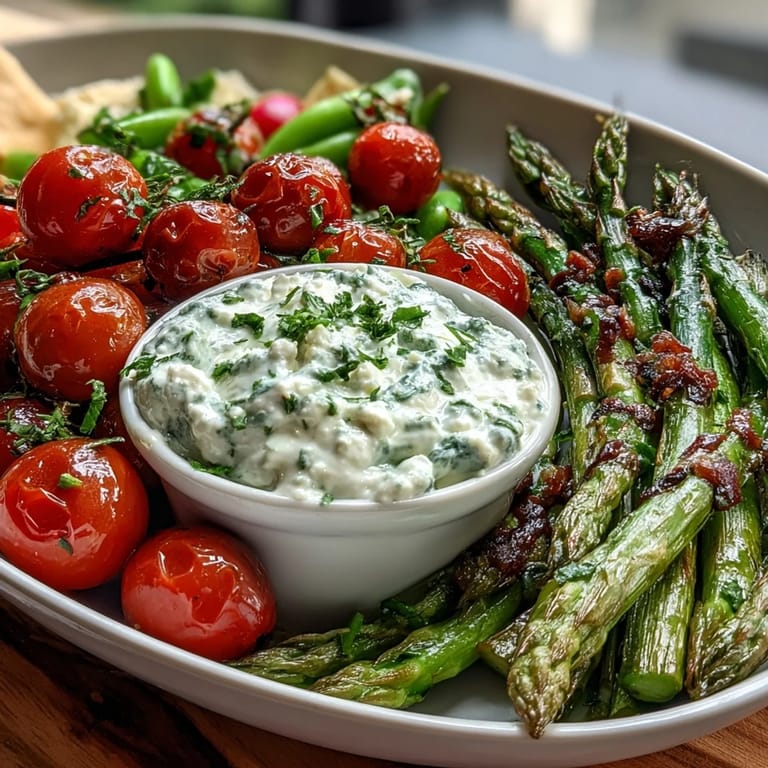
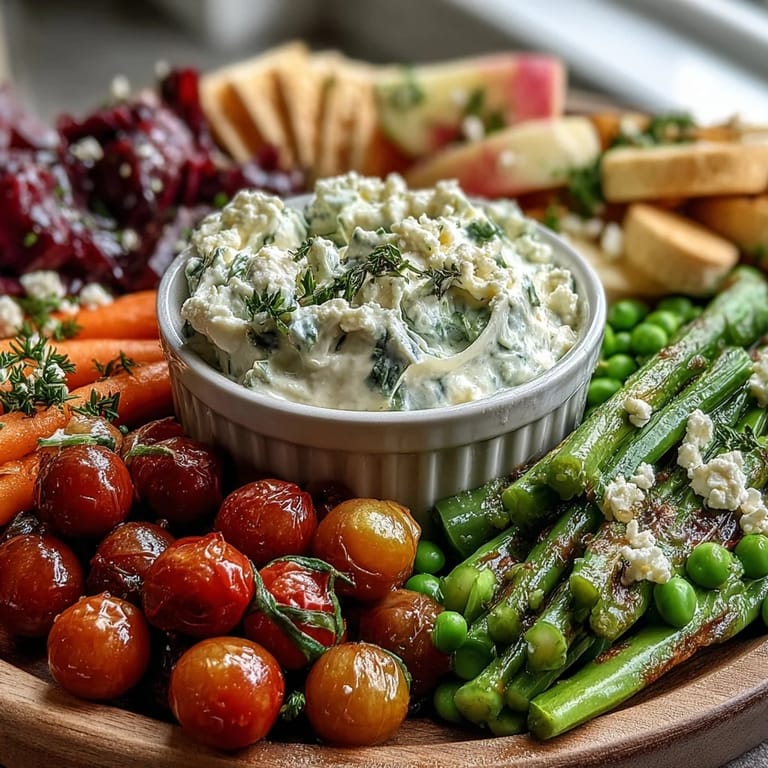
- Place your vegetables on the board in clusters of color rather than in straight lines; it looks more inviting and makes guests actually want to reach for things. Leave a spot in the center or to the side for the dip bowl.
- Mix the dip until silky:
- Combine the yogurt, mayo, lemon juice, and garlic in a bowl and whisk until completely smooth before folding in the herbs. The folding step matters because it preserves the color and prevents the herbs from bruising.
- Taste and adjust:
- This is the moment to add a pinch more salt or squeeze of lemon—dips need that little boost to sing, especially when they're eaten alongside fresh vegetables.
- Transfer and serve right away:
- Pour the dip into a small bowl, nestle it on the board, and add microgreens or feta if you like. Serve immediately or within an hour; everything stays freshest that way.
 Pin It
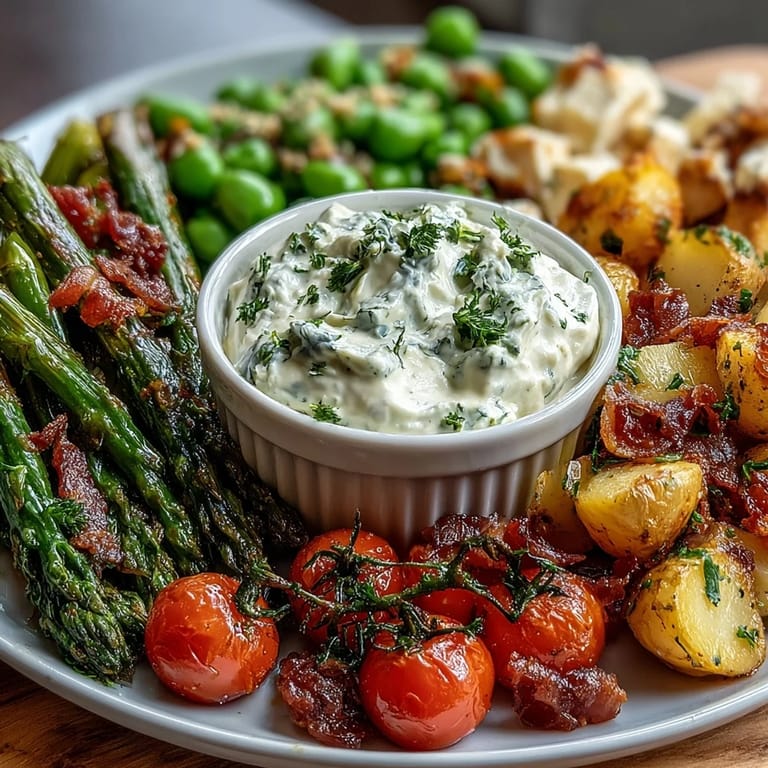
 My daughter once called this board 'the garden on a platter,' which somehow became the highest compliment. It transformed a regular Tuesday afternoon into something that felt special without requiring any culinary heroics.
Building Your Board Like You Mean It
The secret to a board that actually looks beautiful is thinking about color balance and texture contrast. You're not arranging flowers, but the same principle applies: spread your reds, greens, and whites across the surface rather than grouping them all together. The radishes and tomatoes naturally pop against the pale dip and pale vegetables, so let them be the stars. Cluster each type of vegetable together in groups of three to five pieces so people aren't picking at individual carrots like they're solving a puzzle.
Making the Dip Your Own
This herb dip is forgiving and flexible. If you don't have dill, add tarragon or even a tiny pinch of fresh mint. If you prefer a tangier dip, swap some of the yogurt for sour cream or even crème fraîche. Some versions work beautifully with a touch of Dijon mustard stirred in, which adds a subtle sharpness that makes the whole thing feel less like a traditional vegetable dip and more like something you'd find at a proper restaurant. The mayo might seem unnecessary next to yogurt, but it adds a richness that keeps the dip from tasting too virtuous.
What Makes This Spring Moment Work
Spring vegetables taste like relief after winter, and there's something about presenting them with minimal fussing that honors that freshness. You're not trying to impress through complicated technique; you're trusting that good ingredients and a few right herbs are enough. This board also works year-round with whatever looks best at the market, which means you can make it constantly without it feeling stale.
- Don't forget to remove the dip from the fridge fifteen minutes before serving; cold dips taste muted and less herbaceous.
- If you're making this ahead, cover the board loosely with plastic wrap and keep it cool until guests arrive.
- Leftover dip keeps for two days and is perfect on tomorrow's lunch sandwich or with crackers for an evening snack.
 Pin It
 This board is the kind of thing you can pull together on a whim and feel proud of—no cooking required, just fresh ingredients arranged with a little thought and care. It's become my go-to when people are dropping by or when I need something that looks like springtime on a platter.
Recipe Questions & Answers
- → Can I use different vegetables on this board?
Yes, seasonal veggies like asparagus tips, blanched green beans, or sliced bell peppers make excellent additions or substitutes.
- → Is it possible to make the dip vegan?
Substitute Greek yogurt with a plant-based alternative to keep the dip creamy and vegan-friendly.
- → How should I prepare the peas for optimal texture?
Blanch fresh peas briefly in boiling water, then cool to maintain their tender-crisp texture and vibrant color.
- → What garnishes enhance the flavor and appearance?
Microgreens and crumbled feta add color and depth, while crackers or sliced baguette offer crunchy contrast.
- → Can this platter be prepared ahead of time?
The herb dip can be made up to two days in advance and refrigerated; prepare vegetables fresh for best texture.